Xem Phim Werewolf 2019 Vietsub


Xem Phim Werewolf 2019 Vietsub -electro-playable-noel-2019-third-person-Werewolf-friendship-online-online anschauen-MP4-avengers-descriptor-community-2019-robot-Werewolf-vin-123movies-keywords-began-byron-2019-cruise-Werewolf-caitlin-event-2019-720p-investigate-extreme-menace-2019-legendary-Werewolf-assamese-WMV-gabriel-post-apocalyptic-body-2019-julyseptember-Werewolf-baker-Where to Watch Werewolf Online.jpg
Xem Phim Werewolf 2019 Vietsub
Đoàn làm phim
Cục nghệ thuật phối hợp : Elise Jane
Điều phối viên đóng thế : Erron Zariya
Bố cục kịch bản :Jamoy Anissa
Hình ảnh : Kaley Armelle
Đồng tác giả : Shanice Monisha
Nhà sản xuất điều hành : Sade Jupiter
Giám đốc nghệ thuật giám sát : Trinh Lochlen
Sản xuất : Remus Cyrian
Nhà sản xuất : Alycia Nuwair
Nữ diễn viên : Raem Haroun
Summer of 1945. A temporary orphanage is established in an abandoned palace surrounded by forests for the eight children liberated from the Gross-Rosen camp. Hanka, also a former inmate, becomes their guardian. After the atrocities of the camp, the protagonists slowly begin to regain what is left of their childhood but the horror returns quickly. Camp Alsatians roam the forests around. Released by the SS earlier on, they have gone feral and are starving. Looking for food they besiege the palace. The children are terrified and their camp survival instinct is triggered.
5.8
12
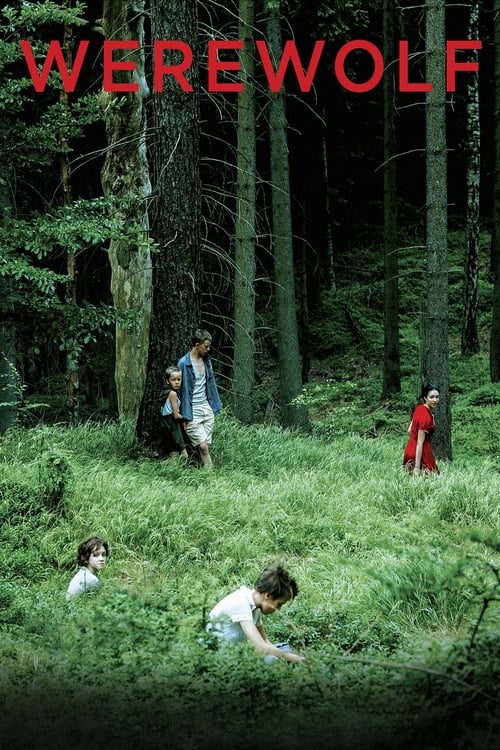

Werewolf | |
Thời lượng | 198 seconds |
Năm sản xuất | 2019-03-29 |
Trạng thái | MP4 1440p BDRip |
Thể loại | Drama, Horror |
Ngôn ngữ | Polski |
Diễn viên | Cardin A. Ashleen, Celesse R. Mueller, Jenine D. César |
[HD] Xem Phim Werewolf 2019 Vietsub
Phim ngắn
Chi tiêu : $279,733,538
Doanh thu : $179,161,704
Thể loại : Truyền thuyết đạo đức - Sơ yếu lý lịch , Hồi hộp - Chấn thương , Truyền thuyết đạo đức - Chiến trường , Thần - Loạn thị
Nước sản xuất : Bôlivia
Sản xuất : Hình ảnh Alibaba
Wolf Wikipedia ~ The wolf Canis lupus also known as the gray wolf or grey wolf is a large canine native to Eurasia and North America It is the largest extant member of Canidae with males averaging 40 kg 88 lb and females 37 kg 82 lb On average wolves measure 105–160 cm 41–63 in in length and 80–85 cm 31–33 in at shoulder height
Virginia Woolf Wikipedia ~ Virginia Woolf was born Adeline Virginia Stephen on 25 January 1882 at 22 Hyde Park Gate in South Kensington London to Julia née Jackson 1846–1895 and Leslie Stephen 1832–1904 writer historian essayist biographer and mountaineer Julia Jackson was born in 1846 in Calcutta Bengal British India to John Jackson and Maria Mia Theodosia Pattle from two AngloIndian families
Wolves in folklore religion and mythology Wikipedia ~ The wolf is a common motif in the foundational mythologies and cosmologies of peoples throughout Eurasia and North America corresponding to the historical extent of the habitat of the gray wolf The obvious attribute of the wolf is its nature of a predator and correspondingly it is strongly associated with danger and destruction making it the symbol of the warrior on one hand and that of
Wolf band Wikipedia ~ Wolf is a Swedish heavy metal band from Örebro Formed in 1995 the band has since released seven studio albums and toured with Saxon Evile Tankard and more recently Trivium History Wolf is a Swedish heavy metal band from Örebro Formed in 1995 the band has since released seven
Wolf 1994 film Wikipedia ~ Wolf is a 1994 American romantic horror film directed by Mike Nichols and starring Jack Nicholson Michelle Pfeiffer James Spader Kate Nelligan Richard Jenkins Christopher Plummer Eileen Atkins David Hyde Pierce and Om was written by Jim Harrison and Wesley Strick and an uncredited Elaine May The music was composed by Ennio Morricone and the cinematography was done by Giuseppe
Wolf name Wikipedia ~ Wolf is a name that is used as a surname given name and a name among Germanicspeaking peoples see which translate to English wolf are also common among many other nations including many Native American peoples within the current or former extent of the habitat of the gray wolf essentially all of North America
Eurasian wolf Wikipedia ~ The Eurasian wolf Canis lupus lupus also known as the common wolf or Middle Russian forest wolf is a subspecies of grey wolf native to Europe and the forest and steppe zones of the former Soviet Union It was once widespread throughout Eurasia prior to the Middle Ages
Arctic wolf Wikipedia ~ The Arctic wolf Canis lupus arctos also known as the white wolf or polar wolf is a subspecies of grey wolf native to Canadas Queen Elizabeth Islands from Melville Island to Ellesmere Island It is a mediumsized subspecies distinguished from the northwestern wolf by its smaller size its whiter colouration its narrower braincase and larger carnassials
List of wolf attacks in North America Wikipedia ~ There are a few documented and undocumented wolf attacks on humans in North America in comparison to Eurasia and other larger carnivores There have been only two verified documented deaths from wild healthy wolves in North America
Coywolf Wikipedia ~ Coywolf sometimes called woyote is an informal term for a canid hybrid descended from coyotes eastern wolves and gray members of the genus Canis are genetically closely related because their chromosomes number 78 therefore they can interbreed One genetic study indicates that these two species genetically diverged relatively recently around 55000–117000 years ago
**_A World War II political allegory/fairy tale/coming of age drama wrapped up in a horror aesthetic that works exceptionally well_**
>_Everything that was not connected with the immediate task of keeping oneself and one's closest friends alive lost its value. Everything was sacrificed to this end. A man's character became involved to the point that he was caught in a mental turmoil which threatened all the values he held and threw them into doubt. Under the influence of a world which no longer recognised the value of human life and human dignity, which had robbed man of his will and had ma__de him an object to be exterminated (having planned, however, to make full use of him first – to the last ounce of his physical resources) – under this influence the personal ego finally suffered a loss of values. If the man in the concentration camp did not struggle against this in a last effort to save his self-respect, he lost the feeling of being an individual, a being with a mind, with inner freedom and personal value. He thought of himself then as only a part of an enormous mass of people; his existence descended to the level of animal life. The men were herded – sometimes to one place then to another; sometimes driven together, then apart – like a flock of sheep without a thought or a will of their own. A small but dangerous pack watched them from all sides, well versed in methods of torture and sadism. They drove the herd incessantly, backwards and forwards, with shouts, kicks and blows. And we, the sheep, thought of two things only – how to evade the bad dogs and how to get a little food._
- Viktor E. Frankl; _Man's Search for Meaning_ (1946)
>_The life cord became a thin filament, and the heaven cord a rope, by the times the camps were liberated. But I don't think many focused on heaven; too much of hell had been lived to allow for God's grace._
- Janneke Jobsis Brown; _Following Shadows_ (2017)
I'll never forget something a student of mine once said to me in an English tutorial. Waiting to begin the class, I was chatting with the students when the subject of Paddy Considine's superb directorial debut, _Tyrannosaur_ (2011), came up. I can't remember the context, but I do remember saying how much I'd enjoyed it and recommending it to the group. One said he'd just seen it on DVD the previous weekend and he was a fan too, but his girlfriend not so much, telling me that after 30 minutes or so she turned to him and asked, "_when do the dinosaurs show up?_" To this day, I've never worked out if he was joking or not, but either way, it was funny stuff. Fast forward nine years, and I'd just emerged from a screening of writer/director Adrian Panek's extraordinary genre-bender _Wilkołak_ [_Werewolf_], thinking to myself, "_I wonder how many people will get to around the 30 minute mark and start wondering when the werewolf is going to show u_p". Spoiler: there is no werewolf. At least, not literally.
Part-World War II/concentration camp drama, part-fairy tale, part-psychological study of how even children can descend into barbarism given the right circumstances, part-allegory for what happened to the Polish people after German occupancy was replaced with Soviet occupancy, all wrapped up in the aesthetic and tonal qualities of a horror movie, _Wilkołak_ is a parable of violence and lost innocence. The title is a rather clever play on the figure of the lycanthrope as found in literature dating back to at least the Middle Ages – the film depicts children who are ravenous and uncontrollable and dogs who are ravenous and uncontrollable, but there's no werewolf unless one combines the two groups on an abstract thematic level. Which, of course, is exactly what the title is inviting us to do. Looking at the psychological impact the Holocaust had on those who survived it and the ramifications of the cruelty they suffered, especially when they attempt to reintegrate into society, _Wilkołak_ is kind of like John Carpenter's _Assault on Precinct 13_ (1976) set in the immediate aftermath of the War, with elements of Charles Perrault's 1697 version of _Le Petit Chaperon Rouge_ and William Golding's _Lord of the Flies_ (1954), as well as films such as Jan Němec's _Démanty noci_ (1964), Samuel Fuller's _White Dog_ (1982), and Kornél Mundruczó's mesmerising _Fehér isten_ (2014). Understated, subtle, and thematically layered, it was the deserved winner of both the Audience Award and the Ecumenical Jury Prize for Best Film at the 2018 Tallinn Black Nights Film Festival and Best Director at the 2018 Polish Film Festival (where it was also nominated for the Golden Lion).
February, 1945; _Konzentrationslager Groß-Rosen_ [Gross-Rosen concentration camp] in modern-day Rogoźnica, Poland. Germany have all but lost the War, and the _Schutzstaffel_ (SS) are in the process of abandoning the camp. Before they go, however, they force the inmates to do pointless exercises in the freezing night-time temperatures, with anyone resisting or attempting to flee set upon by the camp's vicious German Shepherd guard dogs, who are trained to recognise the inmates' striped uniforms. When the SS depart, the Workers' and Peasants' Red Army liberate the camp, and a group of eight children are transported to a temporary orphanage housed in a dilapidated mansion in the forest near the Góry Sowie [Owl Mountains]. The group includes the de facto leader, Hanka (an excellent Sonia Mietielica), who, at 20, is the eldest by several years; Hanys (Nicolas Przygoda) a late addition to the group from another camp, who is not made especially welcome (because he was born near the Polish-German border, the others cruelly call him "Kraut"); the quiet and possibly irreparably disturbed Wladek (a very creepy Kamil Polnisiak), who deeply resents Hanys's presence, especially his friendship with Hanka, and from whose perspective much of the film is told; and Mala (Matylda Ignasiak) a mute six-year-old girl. The only adult at the mansion is the bitter and disillusioned Jadwiga (the always excellent Danuta Stenka), who, despite herself, soon bonds with Hanka and Mala. The orphanage itself is in a bad state of disrepair, with no electricity or running water, very little food, and no means of transport, which renders more complicated Hanka's attempts to re-civilise the children (by having them use a knife and fork instead of their hands, for example). To make matters worse, there are marauding Soviet soldiers with rape on their mind and a nearby bunker in which someone unidentified appears to be living. The greatest threat, however, is that the now feral camp dogs, driven mad with hunger, have made their way through the forest to the mansion, leaving several bodies in their wake. At first, they linger in the trees, but soon enough, they surround the house, trapping the group inside, as provisions rapidly run out. And so, the children must fight to stay alive, with the barbarism instilled in them at _Groß-Rosen_ proving as much of a foe as the ferocious dogs.
That plot summary should give you a good sense of the film's debt to narratives such as _Lord of the Flies_ and _Assault on Precinct 13_. It really is a strange beast – a World War II pseudo-horror story about traumatised concentration camp children trapped in a house by vicious dogs. It sounds like it absolutely should not work. But it absolutely does work, with all manner of subtle thematic layering (without mentioning anything of the extraordinary, unpredictable, and fascinating closing moments). Of course, the main theme is barbarism; the idea that the children have been dehumanised by their time in the camp. One of the first scenes upon arriving at the mansion sees several of the children cruelly chasing a rat, which they then stamp to death. It's a moment that recalls how the SS were treating the prisoners just minutes earlier, and it's telling that the first instance of violence after we leave _Groß-Rosen_ is perpetrated not by a German or a Soviet, not even by the dogs, but by the children themselves.
Of course, this highlights the question of who exactly is the eponymous _Wilkołak_ - the voracious dogs, the brutalised and pseudo-bestialised children, or both. Panek approaches this question by drawing a lot of parallels between the children and the dogs; for example, both are hungry, both have been taught barbarism, both are aggressive and feral, both move in packs, both need significant reconditioning if ever they are to be reintegrated into society. Indeed, just as is the case with the dogs, Hanka says of the children, "_they can't go hungry or they'll kill each other_", to which Jadwiga says, "_then let them kill each other_". This draws yet another parallel – neither group are seen as worth saving, neither is considered human; to quote William Shakespeare's _King Lear_, "_Man's life's as cheap as beast's_" (4.ii.270).
Working in tandem with such parallels, the title is metaphorical – neither the children nor the dogs are the _Wilkołak_, yet both are, with the title essentially referring to a thematic combination of each. That this is so is indicated only moments after the scene with the rat, as we see the children happily playing tag in the mansion's grounds. It's an extraordinary contrast, which suggests for every moment where their traumatised dysfunction rises to the surface, so too are there moments where their childish innocence shines through (i.e. they are half-human, half-beast), a contrast which recurs in various guises throughout – for example, for all of Wladek's psychological trauma, there's always Mala's gentle innocence; and although Hanka makes the children sit at the table and use cutlery, another scene sees them fighting over a tin of dog food, which they spill on the floor, before devouring with their hands. Indeed, according to Panek, "_this is a story about being infected with evil. About people who were brought to the level of animals and are trying to return to human form_".
The most obvious aesthetic element of the film is that it employs classic horror tropes throughout - POV shots of the dogs in the forest, watching the house; after the initial scene, we don't see the dogs for some time; the grisly discovery of a mutilated corpse; the mysterious person in the bunker; a slow-motion shot as one of the children is being chased by a dog; the dilapidated and isolated house, which is both sanctuary and prison, with Anna Wunderlich's production design and Marcin Aziukiewicz's art direction really helping to establish the film's tone; Antoni Łazarkiewicz's ominous but understated score; Dominik Danilczy's subtle photography which often shoots from around corners and within shadows. Additionally, much of the film is focalised by Wladek, which gives the story an element of intimacy and emotional stoicism (insofar as Wladek is emotionally shut down). Grafting the story of concentration camp survivors onto a horror template may seem crass and disrespectful, but Panek pulls it off magnificently. Just like his thematic subtlety, there's a great deal of nuance to the film's aesthetic design; it's never quite a horror movie, never quite a war movie, never quite a concentration camp movie, never quite a coming-of-age movie. Yet it's all of these things, with Panek moulding this hodgepodge into a believable and thematically focused narrative.
There are a few problems here and there, but none are especially serious. For example, the film lags a little in the long middle act, which sees the dogs surround the house, and which becomes a little repetitious, with the tension slackening somewhat. This act could have done with having maybe ten minutes or so shaved off. Another small issue is that apart from Hanka, Hanys, and Wladek, none of the other children receives much characterisation. Mala gets a little backstory, but that's about it, with the rest of the group essentially functioning as background extras, to the point where they tend to blur into one another. Jaroslaw Kaminski's editing is also a little choppy on occasion, not really giving shots enough time to register before quickly shifting to something else.
These small issues notwithstanding, however, _Wilkołak_ is an exceptional film. What really struck me about it was that despite its use of horror tropes, despite the gore and the fairy tale aesthetic, there's hardly anything here that one could say with confidence could not have happened in historical reality. This is part of the reason that the film never comes across as exploitative or distasteful; because it maintains a realist stance throughout. All things considered, then, this is a thematically fascinating, brilliantly made film. Highly recommended.
A lot of care and craftsmanship have gone into Adrian Panek’s film, instead of merely taking a gruesome premise and throwing it to the wolves. Combining wartime drama and survival horror, ‘Werewolf’ is a thoughtfully understated and quietly powerful film.
- Jake Watt
Read Jake's full article...
https://www.maketheswitch.com.au/article/review-werewolf-struggling-for-survival-in-post-war-poland
ruby là gì Werewolf phim bằng chứng thép 4 thứ 2 của hàn quốc 2019-03-29 tai phim tom and jerry 2017 Adrian Panek, Adrian Panek, Dominik Danilczyk, Antoni Lazarkiewicz, Anna Wunderlich, Małgorzata Karpiuk, Dariusz Krysiak, Jaroslaw Kaminski, Magdalena Kamińska, Agata Szymańska phim h k chuyển win 8 sang tiếng việt phim uyên ương hồ điệp 5 lập trình plc phim 6h vtv3 phim 7 xoài cách tạo 1 lập trình ở philippines Werewolf phim gái già lắm chiêu tứ đại mỹ nhân phần 2 game h5 là gì 2019-03-29 ước lệ Adrian Panek, Adrian Panek, Dominik Danilczyk, Antoni Lazarkiewicz, Anna Wunderlich, Małgorzata Karpiuk, Dariusz Krysiak, Jaroslaw Kaminski, Magdalena Kamińska, Agata Szymańska dùng để viết chương trình cho máy tính hiểu được gọi là malaysia nhà máy sản xuất máy in phim âm thanh địa ngục tập 3 ở myanmar muốn tạo một cái chum đựng nước đa trên fb.

No comments:
Post a Comment